

















P&G Future Friendly
Design for the 'Future Friendly' initiative by Procter & Gamble.
2010
Procter & Gamble had a programme — Future Friendly — built around helping consumers save energy, save water, and reduce waste through their range of products. The challenge was making that message feel personal and explorable rather than corporate and prescriptive.
I was brought in through agency Organics to design the interaction for the Future Friendly website — a platform where consumers could discover environmental tips room by room, share them with friends and family, save them for later, and shop for the P&G products behind them.
Approach
The core challenge was turning a product-led sustainability programme into something a consumer would actually want to spend time with. A list of tips attached to product pages wouldn't do it. The site needed a navigational concept that made discovery feel natural.
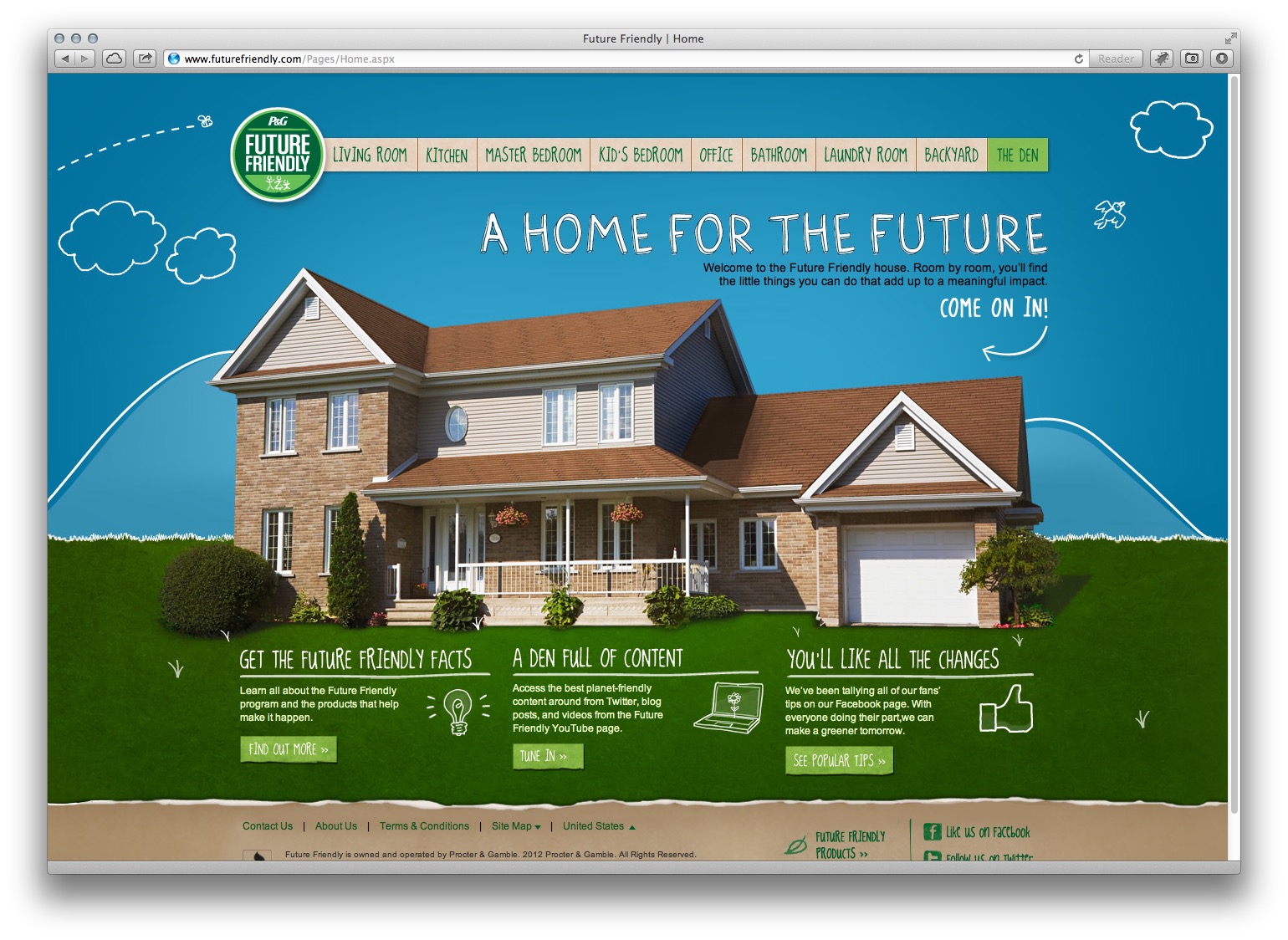
The solution was a house — every room explorable, every hotspot a tip, every tip shareable, saveable, and connected to a product. The house gave the programme a spatial logic that matched how people actually think about their homes.


Visitors explored sustainability room by room
Organising environmental tips by product category or programme initiative would have reproduced the structure of a corporate brochure. Organising them by room — living room, kitchen, master bedroom, kids' bedroom, office, bathroom, laundry room, backyard, the den — made the content feel like it belonged to the visitor's life, not P&G's product catalogue.
Each room had its own visual space and hotspots, so discovery felt like moving through a home rather than browsing a list.


Every tip was shareable, saveable, and shoppable
A tip discovered in the kitchen could be saved for later, posted to a Facebook wall, or used to shop for the relevant P&G product — without leaving the context of that room. The site flowchart shows the full interaction model: tip page branching into save, share, delete, and Facebook wall post flows, all returning the visitor to where they started.
This kept the experience fluid — a visitor could go from discovering a tip to sharing it with a friend in two steps.


Social content gave the programme life beyond the site
The Den section aggregated the programme's social presence — Twitter posts, blog content, and the Future Friendly YouTube channel — into a single content hub on the site. The homepage surfaced the most popular tips being shared by visitors on Facebook, creating a live social layer tied directly to visitor behaviour.


Results
A fully interactive environmental tips platform for P&G's Future Friendly programme, covering nine room-based experiences with hotspot tips, save and share flows, Facebook integration, and direct P&G product shopping. Delivered through agency Organics.
9 rooms · tips saveable, shareable & shoppable · Facebook, Twitter & YouTube integrated · P&G product shopping throughout