


















Apple Retail Experiences
Better Apple shopping experiences for the world
Brief
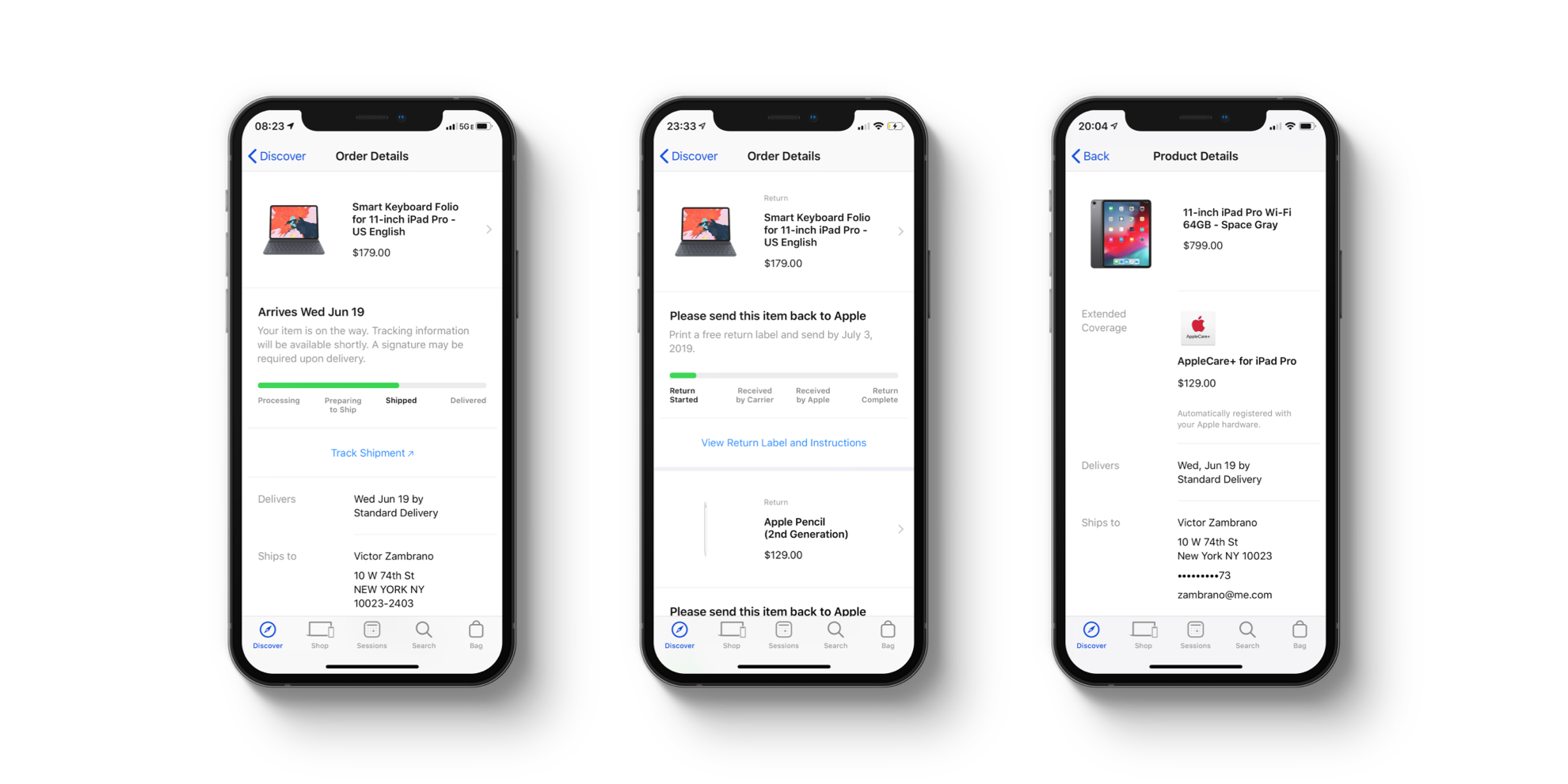
I designed two interconnected products for the Apple Store App: an international expansion of the return and refund flow to 26 markets in EMEIA and APAC, and a new order details screen to support the new flows.
The return flow existed only for the US. Expanding it to EMEIA and APAC meant accounting for specific logistics partners, carriers, currencies, and financial regulations in each of the 26 market we were expanding it to.
Whilst working on the returns & refunds, we realised the Apple Store App's order details screen was not designed to handle returns, multiple items, or the combination of both across hundreds of Apple product configurations worldwide.
Each was a substantial design challenge; together, they had to work as a single seamless experience.
Align across teams before designing anything
The return and refund flow touched marketing, logistics, customer support, and Apple Care, each with their own requirements and constraints. Rather than designing against a single brief, I worked across all four teams in EMEA and APAC to consolidate requirements before any flows were drawn.
This produced a single agreed-upon set of requirements that accounted for carrier differences, refund timelines, and country-specific financial regulations, preventing contradictions from surfacing mid-build.

Return flow
Simplified end-to-end example

Full return flows
Flows for 1 item, 2 or more items

Full replacement flows
Flows for 1 item, 2 or more items
Redesign Order Details mid-project
Midway through designing the return flows, it became clear the existing Order Details screen couldn't support the new scenarios. It hadn't been scoped as part of the project, but without it, the return flows couldn't ship.
The screen also had to work for every product Apple sells—from a single cable to a configured Mac Pro with accessories, AppleCare, and trade-in—across dozens of countries, currencies, and carrier combinations. A bespoke solution for each scenario wasn't viable.
I was handed the problem and tasked with finding a solution that worked within the existing deadline. I analysed hundreds of real order examples, identified the recurring product spec patterns, and designed a modular screen that could handle both the existing cases and every new combination the return flows introduced.
The modular order details design across its three primary states, each built from the same component set:

Order details for a purchase

Order details for a return

Order details for multiple returns
Design for combinations, not scenarios
The temptation in a project of this scope is to design named scenarios: "user buys one item," "user returns two items," and so on. Instead, the Order Details screen was built around a component model — each element designed to work independently and in any combination.
This meant new product types, new return states, and new country requirements could be accommodated by assembling existing components rather than designing new screens. It reduced the long-term design and engineering burden for a screen that would need to evolve across dozens of markets.

Order details screen
Examples of possible scenarios

Order details screen
Examples of possible scenarios, expanded
Results
Return and refund flows designed for more than 26 countries across EMEIA and APAC. A new Order Details screen shipped worldwide, handling hundreds of product and order state combinations from a single modular design. Delivered in coordination with marketing, logistics, customer support, and Apple Care teams across two regions.
design of return and replacement flow for 26 markets in EMEIA and APAC · modular design system for ASA order details screen · worldwide combined rollout