













PayPal Consumer Financial Products
Banking tools to empower the unbanked/underbanked
More than 25% of the US population can be, at any given time, unable to hold a bank account. PayPal had no product addressing this. The unbanked and underbanked had access to PayPal's core payment tools but nothing designed around their specific financial circumstances—no way to deposit cash, save money, cash checks, manage bills, or invest without a traditional bank.
I was brought in to design a new suite of financial products built specifically for this audience.
--
Learn more about how PayPal's Taking Further Steps to Help the Unbanked
Weekly user testing drove every design decision
People that has none or limited access to banking have different realities. Understanding these realities was indispensable to creating a solution to their needs.
In order to get to know our audience and make sure we designed for their needs and contexts, we defined a user-centric design cycle:
We had 3-5 prospective users come for interviews every Wednesday. Every week followed the same cycle: understand the feedback from the interviews and design prototype walkthroughs, identify actionable design ideas, implement them, add them to the prototype, and present the updated prototype to a new cohort of 3–5 users the following Wednesday.
This meant the product was driven by real user needs at every stage. Design decisions weren't validated in retrospect; they were either confirmed or corrected before the next sprint began.


Check cashing built around physical stores
People without access to banks lack convenient access to their money, wether to deposit or withdraw it. We aimed to solve this gap by partnering with existing businesses with a wide presence and a brand known to our audience—7-Eleven, CVS, Rite Aid—to allow them to conveniently deposit or withdraw money.
With the help of a simple barcode generated in the app that users presented at the store counter, customers could deposit to, or withdraw cash from, their PayPal balance, and have access to their money within 15 minutes.

Cash deposit at retail locations
The cash deposit flow: store selection, barcode generation with automatic screen brightness, and in-app cashier instructions.

Check deposit from the app
Check deposit flow: amount entry, front and back capture, and confirmation.
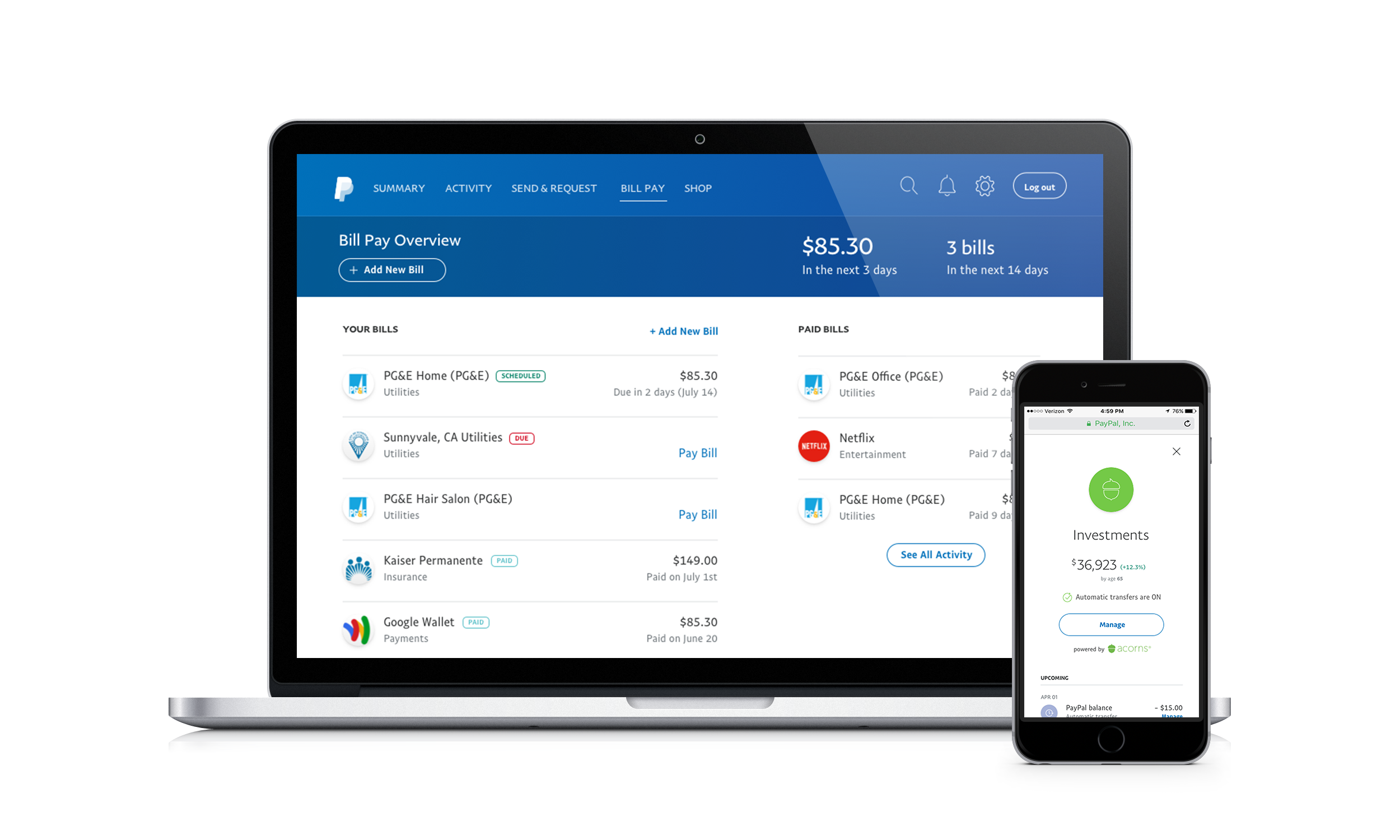
Consolidating bill management into a simple financial overview
Most people pay bills across multiple companies, each with its own website and due date. Keeping track of it all was stressful — it was easy to miss a payment or get caught off guard by an unexpected charge.
Talking to users made this clear. They didn't just want a faster way to pay. They wanted to see everything in one place: what was due, what was coming up, and how much it would all add up to.
The result was a single dashboard showing all bills and their status — overdue, due soon, or already paid — along with a summary of what was coming in the next seven days. Payments could be made in a few steps, with clear confirmation of amounts and dates throughout.
We turned a scattered, stressful chore into something users could actually stay on top of.


Results
Seven financial products designed and shipped for the unbanked and underbanked US market: debit card access, cash management, check cashing via retail barcode, direct deposit setup, savings, bill payment, and Acorns-powered investment. Cash deposits supported at several major retail chains nationwide.