
















GridOS Interface
Overall UX/Design direction for final phase of the GridOS interface project
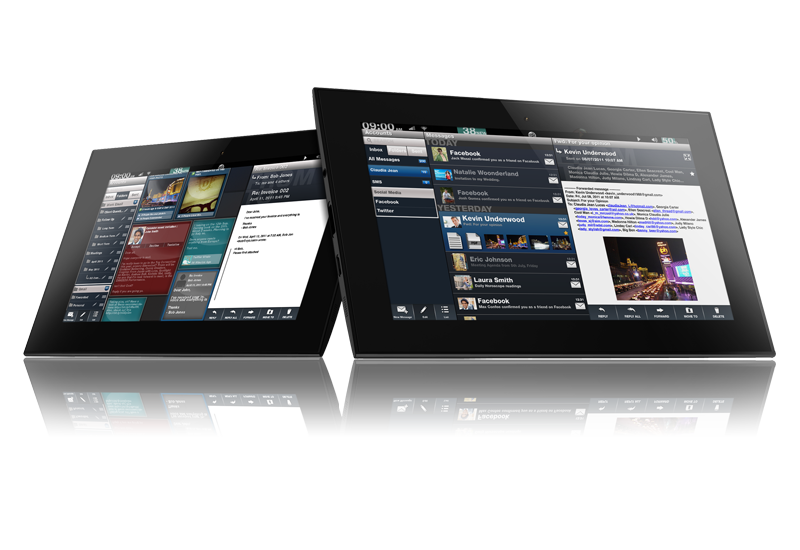
Grid had a vision for an operating system layer to sit on top of Android — gesture-driven, chrome-less, with no physical buttons or standard Android icons. What they had was a concept that needed to become a shippable product, across two devices: the Grid10 tablet and the Grid4 smartphone.
I was brought in to lead UX and UI direction for the final production phase, managing a team of 7 designers — 5 motion graphic and 2 visual — against an offshore development team in Singapore and Southeast Asia.
Approach
The core challenge was translation: how do you communicate a gesture-based, animation-driven interface to a remote development team in enough detail that what gets built matches what was designed? Wireframes couldn't do it — a static frame can't describe a two-finger swipe down from the top to reach the home screen, or what happens at each frame of that transition.
The decision was to replace wireframes entirely with PSD files and AfterEffects videos precise enough to stand alone as specification.

GridOS on Grid10 tablet
A remote team built exactly what was designed
The GridOS interactions were gesture-based and animation-dependent — the kind of experience that a static wireframe actively misrepresents. Every delivery was made as a PSD and a frame-accurate AfterEffects video that showed the exact interaction a user would experience, in the exact sequence it would occur.
This gave the Singapore development team a specification they could build directly from, without interpretation or back-and-forth on intent.

Home

Clock

Messaging

Photos

Maps

Browser

Calendar
A chrome-less, gesture-only interface with no Android precedent
Several native Android applications — Photos, Videos, Messages, Calendar, Global Search, Notifications Centre, and Contextual Menu — were redesigned to fit the GridOS interaction model. Others had no Android equivalent and were built from scratch: a chrome-less browser, Maps, Keyboard, Volume controls, and a cross-device App AutoSync.
The chrome-less browser in particular had no standard Android template to work from — every interaction state was defined new.

Home

Browser

Calendar

Contacts

Music

Maps
Interaction Videos
12 AfterEffects interaction videos delivered as development specification — covering the full GridOS interaction set across both devices.
Results
GridOS shipped on two devices — the Grid10 tablet and the Grid4 smartphone. The interface covered 7 redesigned native applications and 5 applications designed from scratch, delivered by a team of 7 designers to an offshore development team across 24–48 hour iteration cycles. The Grid10 received a named review from Walt Mossberg in the Wall Street Journal.
2 devices · 12 native & new apps · 7 designers · 24–48hr delivery cycles · WSJ review by Walt Mossberg